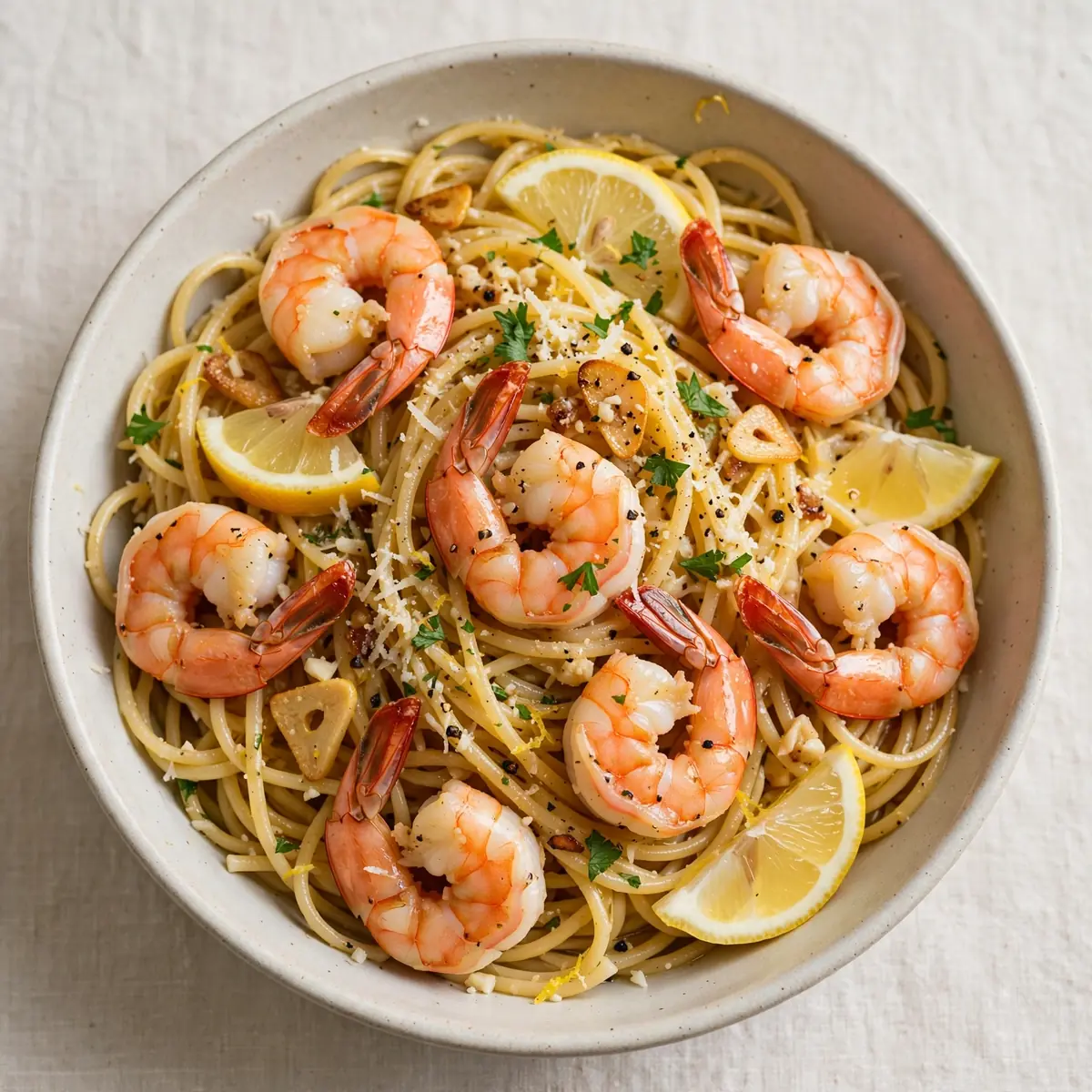
Ingredients
Method
- Boil the pasta: Fill your largest pot with water, bring it to a rolling boil, and season generously with salt. Drop in the spaghetti and cook for one minute less than the packet suggests. You want it al dente, with a slight white core when you bite into a strand. The water should smell faintly of the sea from the salt.
- Sear the prawns: While the pasta boils, heat two tablespoons of olive oil in a large frying pan over medium-high heat until it shimmers. Add the prawns in a single layer (work in batches if needed). Cook for 90 seconds on one side until the bottoms turn pink and slightly golden, then flip. They should feel firm to the touch and smell sweet, not fishy. Remove them to a plate.
- Build the base: Lower the heat to medium and add the remaining olive oil and the sliced garlic. Stir constantly for about 45 seconds until the garlic turns pale gold and releases a nutty, mellow aroma. Do not let it brown, as that creates bitterness. The oil should look fragrant and slightly cloudy.
- Create the sauce: Pour in the warm chicken stock and the lemon juice, then scrape the bottom of the pan with a wooden spoon to lift all the browned bits. Let this bubble for two minutes. You’ll see the liquid reduce slightly and become a thin, glossy sauce that smells bright and savoury.
- Combine everything: Drain the pasta, reserving a mugful of the starchy water. Toss the hot spaghetti directly into the pan with the sauce. Add the lemon zest, the cooked prawns, and a generous handful of Parmesan. Use tongs to lift and turn the pasta, coating every strand. The cheese should melt into the sauce, making it silky and thick. If it looks dry, add pasta water a splash at a time until it glistens.
- Finish with freshness: Sprinkle over the chopped parsley and the red pepper flakes if using. Toss once more, then taste. Adjust salt and pepper as needed. The pasta should look glossy, smell of lemon and garlic, and the prawns should be evenly distributed throughout.
Notes
Reserve pasta water to adjust sauce consistency. Do not overcook the garlic to avoid bitterness.