High-Protein Shakshuka With Feta
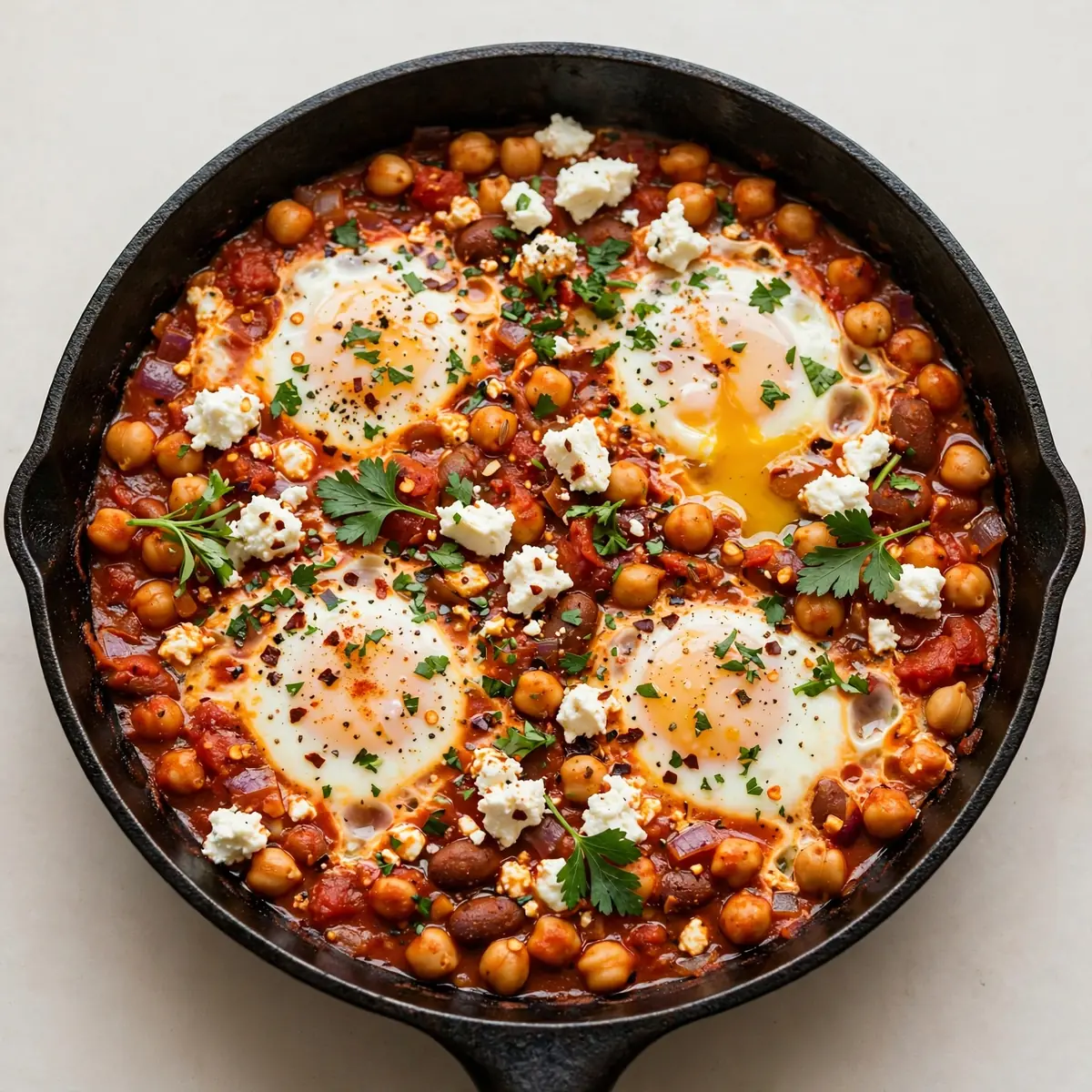
I remember staring into my fridge at the end of a long week, faced with a half-empty jar of passata, a block of feta, and a dozen eggs. I needed something hearty, high in protein to fuel my weekend, but I also needed it to stretch across a few lunches. That’s when this High-Protein Shakshuka with Feta was born, and it’s been a staple in my meal-prep rotation ever since. It costs just a few pounds per serving, comes together in one pan, and tastes even better the next day.
Recipe Overview
- Prep Time: 10 minutes
- Cook Time: 20 minutes
- Total Time: 30 minutes
- Servings: 4 generous portions
- Difficulty: Easy
Why You’ll Love This High-Protein Shakshuka with Feta
- Budget-Friendly Batch Cooking: This recipe costs roughly £1.50 per serving, making it ideal for filling your meal prep containers without emptying your wallet.
- Protein-Packed Start or Main: With eggs, feta, and a legume base, each portion delivers over 25g of protein to keep you satisfied for hours.
- One-Pan Wonder: You only need a single deep skillet or saucepan, which means minimal washing up — a blessing on busy meal-prep Sundays.
- Stores and Reheats Brilliantly: Unlike many egg dishes, this shakshuka holds its texture in the fridge and reheats beautifully in a microwave or on the hob.
- Endlessly Customisable: You can tweak the spice level, swap the beans, or add leftover cooked chicken to change the flavour profile each week.
Ingredients You’ll Need
- 2 tablespoons olive oil
- 1 large onion, finely diced (about 150g)
- 3 garlic cloves, minced
- 1 red bell pepper, diced (about 150g)
- 1 teaspoon ground cumin
- 1 teaspoon smoked paprika
- ½ teaspoon chilli flakes (optional, for heat)
- 800g tinned chopped tomatoes (two standard tins)
- 400g tinned chickpeas, drained and rinsed
- 200g tinned butter beans, drained and rinsed
- 6 large eggs
- 150g feta cheese, crumbled
- Salt and black pepper, to taste
- Small handful of fresh parsley or coriander, chopped (for garnish)
Tip: For the best texture, use a good-quality tinned tomato. I find the Italian-style ones with basil already added give a lovely depth of flavour without extra effort.
How to Make High-Protein Shakshuka with Feta
- Sweat the aromatics: Heat the olive oil in a large, deep frying pan or sauté pan over a medium heat. Add the diced onion and cook for 4–5 minutes, stirring occasionally, until the pieces turn translucent and release a sweet, fragrant aroma. The edges should just begin to catch a pale gold colour.
- Add the garlic and pepper: Toss in the minced garlic and diced red bell pepper. Cook for another 2–3 minutes. The garlic will become highly aromatic, and the pepper will soften, turning a deeper red and losing its raw crunch. You should hear a gentle sizzle as they hit the pan.
- Bloom the spices: Sprinkle over the ground cumin, smoked paprika, and chilli flakes (if using). Stir continuously for about 30 seconds until the spices become fragrant and darken slightly. The smell will shift from raw vegetables to a warm, smoky, and slightly earthy scent. Be careful not to let them burn.
- Build the sauce: Pour in both tins of chopped tomatoes. Stir well to combine everything, scraping the bottom of the pan to lift any browned bits. Bring the sauce to a gentle simmer — you’ll see small bubbles breaking the surface across the whole pan, not just at the edges. Season with a pinch of salt and a few grinds of black pepper.
- Add the beans: Fold in the drained chickpeas and butter beans. Reduce the heat to low-medium and let the sauce simmer uncovered for 8–10 minutes. It should thicken noticeably; the colour will deepen to a rich rust red, and the liquid will reduce so the spoon leaves a trail when you drag it through. Stir occasionally to prevent sticking.
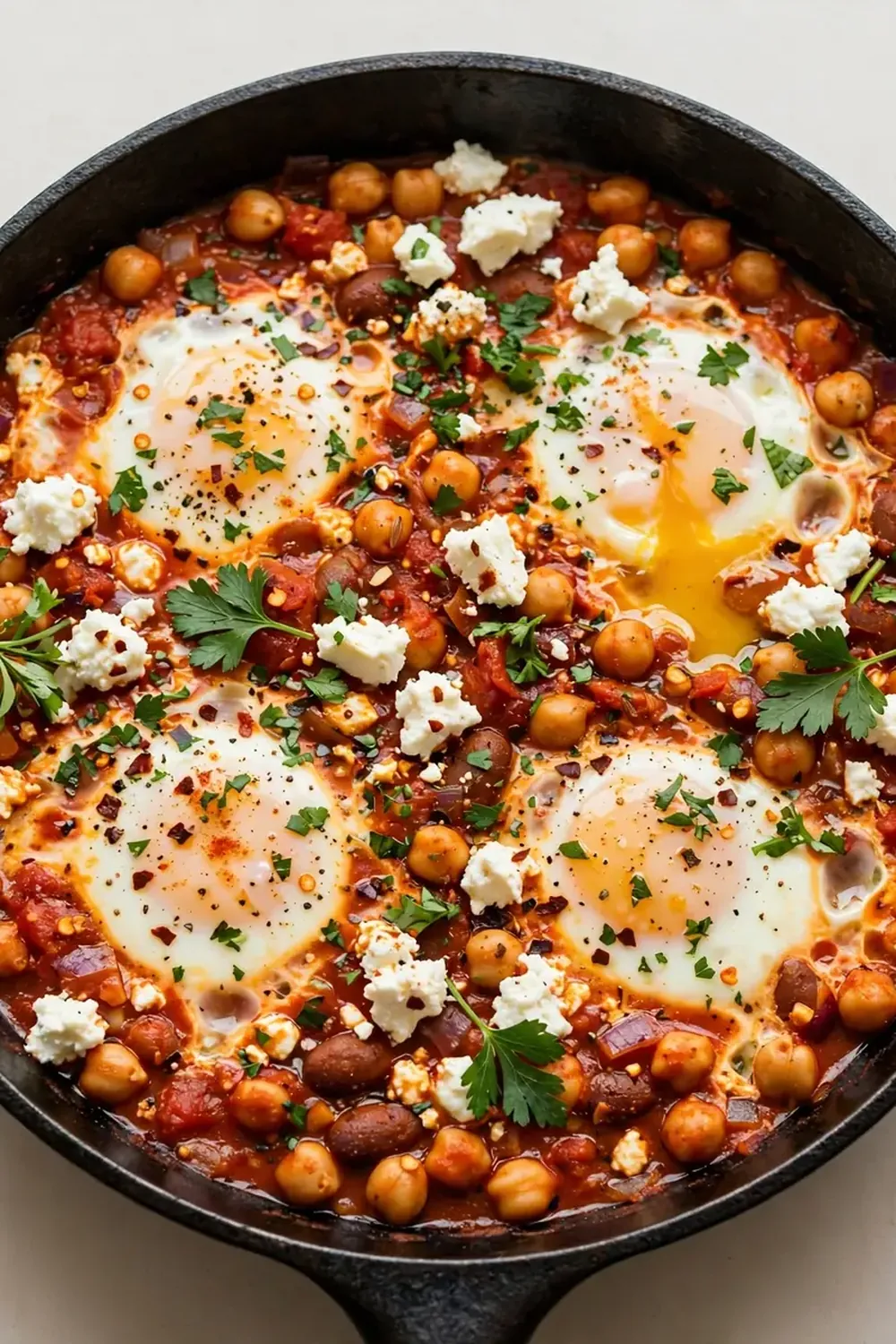
- Create the egg wells: Using the back of a spoon, make six evenly spaced indentations in the thickened sauce. Carefully crack an egg into each well. The yolks should sit proud above the surface, with the whites settling into the sauce.
- Cook the eggs: Cover the pan with a lid and cook on low heat for 6–8 minutes. Check the eggs after 6 minutes — the whites should be fully set and opaque, with no wobble, while the yolks remain soft and runny. If you prefer firmer yolks, cook for an additional 2 minutes. The sauce will bubble gently around the eggs, releasing a steamy, tomato-rich aroma.
- Finish with feta and herbs: Remove the pan from the heat. Scatter the crumbled feta evenly over the top, then sprinkle with fresh parsley or coriander. Let it rest for 2–3 minutes before serving — this allows the residual heat to soften the feta slightly without melting it completely.
Tips From My Kitchen
- Use a wide pan for even cooking: A pan that’s at least 28cm in diameter gives the eggs enough space to cook evenly without overcrowding. If the pan is too narrow, the whites will take too long to set, and the yolks may overcook before the whites are done. I use my trusty non-stick sauté pan for this reason.
- Don’t skip draining the beans: Rinsing tinned chickpeas and butter beans removes the starchy, salty liquid they’re packed in. This prevents the sauce from becoming overly thick or slimy. Pat them dry with a tea towel if you have time — it helps them hold their shape better during simmering.
- Control the heat for perfect eggs: Once you add the eggs, keep the heat on low. High heat will cause the whites to become rubbery and the sauce to scorch on the bottom. A gentle, steady simmer is what you’re after — you want the eggs to steam, not fry. If your hob runs hot, consider using a diffuser.
- Make it ahead on purpose: This shakshuka is designed for meal prep. Cook the sauce and beans up to three days in advance, store it in the fridge, then reheat gently and add fresh eggs when you’re ready to serve. Alternatively, cook the whole dish, portion it out, and reheat individual servings — the eggs will firm up slightly but remain delicious. My husband, who’s usually picky, asked for seconds when I reheated it for lunch the next day!
- Adjust the consistency to your liking: If you prefer a thicker sauce that clings to bread or rice, simmer it for an extra 5 minutes before adding the eggs. If you like it saucier, add a splash of vegetable stock or water along with the tomatoes. The sauce should be thick enough that the eggs don’t swim, but loose enough to spoon up easily.
- Let the feta come to room temperature: Crumble the feta while it’s still cold from the fridge for neat pieces, but let it sit on the counter for 10 minutes before scattering over the hot dish. This prevents a temperature shock that can make the cheese turn grainy. The result is a creamy, salty contrast to the tangy tomato sauce.
Common Mistakes to Avoid
- Overcrowding the pan: Trying to cook more than six eggs in a standard pan leads to uneven cooking. The whites from one egg will merge into another, and the yolks will struggle to set. Stick to six eggs maximum, or use two pans if you need to scale up. If you’re meal-prepping for four, six eggs are plenty — the beans and feta provide ample protein to make each portion satisfying.
- Wrong temperature: Cooking the sauce on too high a heat will cause it to splatter and burn, leaving you with a bitter, scorched base. Always simmer the sauce gently — you should see lazy bubbles, not a vigorous boil. When adding the eggs, reduce the heat to low immediately to give the whites time to set without toughening the yolks.
- Skipping the rest time: Serving the shakshuka straight off the heat means the feta hasn’t had time to soften, and the eggs are still steaming aggressively. Letting the pan rest for 2–3 minutes allows the flavours to meld, the sauce to settle, and the eggs to finish cooking gently. You’ll get a more cohesive dish with every spoonful.
Delicious Variations to Try
- Spicy Version: Add a finely chopped fresh red chilli (deseeded if you prefer less heat) along with the garlic and pepper. You can also stir in a teaspoon of harissa paste or a dash of cayenne pepper with the spices. The heat builds gradually and pairs beautifully with the creamy feta.
- Vegetarian/Vegan Option: To make this vegan, omit the eggs and feta. Instead, double the quantity of chickpeas and butter beans, and add a block of firm tofu, crumbled and sautéed until golden, for texture. Stir in a tablespoon of nutritional yeast to mimic the savoury, cheesy note of the feta. The sauce remains rich and satisfying on its own.
- Different Protein: If you want a meatier version, add 300g of cooked, shredded chicken breast or leftover roast chicken along with the beans. You can also use cooked turkey mince — brown it first in the pan before adding the onions, then proceed with the recipe. This boosts the protein content even further and makes for a heartier meal-prep option. For another protein-rich meal prep idea, check out my High Protein Chicken Fajita Meal Prep Bowls for a similarly budget-friendly approach.
What to Serve With High-Protein Shakshuka with Feta
- Thick slices of crusty sourdough or wholemeal toast, for dipping into the runny yolks and sauce.
- A simple side salad dressed with lemon juice and olive oil to cut through the richness.
- Fluffy couscous or quinoa, if you want to stretch the meal further and add extra fibre.
- Steamed greens like spinach or kale, wilted quickly and stirred through the sauce just before serving.
- For a low-carb option, serve with roasted courgette ribbons or cauliflower rice.
Frequently Asked Questions
High-Protein Shakshuka with Feta
Ingredients
Method
- Sweat the aromatics: Heat the olive oil in a large, deep frying pan or sauté pan over a medium heat. Add the diced onion and cook for 4–5 minutes, stirring occasionally, until the pieces turn translucent and release a sweet, fragrant aroma. The edges should just begin to catch a pale gold colour.
- Add the garlic and pepper: Toss in the minced garlic and diced red bell pepper. Cook for another 2–3 minutes. The garlic will become highly aromatic, and the pepper will soften, turning a deeper red and losing its raw crunch. You should hear a gentle sizzle as they hit the pan.
- Bloom the spices: Sprinkle over the ground cumin, smoked paprika, and chilli flakes (if using). Stir continuously for about 30 seconds until the spices become fragrant and darken slightly. The smell will shift from raw vegetables to a warm, smoky, and slightly earthy scent. Be careful not to let them burn.
- Build the sauce: Pour in both tins of chopped tomatoes. Stir well to combine everything, scraping the bottom of the pan to lift any browned bits. Bring the sauce to a gentle simmer — you’ll see small bubbles breaking the surface across the whole pan, not just at the edges. Season with a pinch of salt and a few grinds of black pepper.
- Add the beans: Fold in the drained chickpeas and butter beans. Reduce the heat to low-medium and let the sauce simmer uncovered for 8–10 minutes. It should thicken noticeably; the colour will deepen to a rich rust red, and the liquid will reduce so the spoon leaves a trail when you drag it through. Stir occasionally to prevent sticking.
- Create the egg wells: Using the back of a spoon, make six evenly spaced indentations in the thickened sauce. Carefully crack an egg into each well. The yolks should sit proud above the surface, with the whites settling into the sauce.
- Cook the eggs: Cover the pan with a lid and cook on low heat for 6–8 minutes. Check the eggs after 6 minutes — the whites should be fully set and opaque, with no wobble, while the yolks remain soft and runny. If you prefer firmer yolks, cook for an additional 2 minutes. The sauce will bubble gently around the eggs, releasing a steamy, tomato-rich aroma.
- Finish with feta and herbs: Remove the pan from the heat. Scatter the crumbled feta evenly over the top, then sprinkle with fresh parsley or coriander. Let it rest for 2–3 minutes before serving — this allows the residual heat to soften the feta slightly without melting it completely.
Notes
I hope this High-Protein Shakshuka with Feta becomes a regular in your meal-prep rotation as it has in mine. It’s forgiving, adaptable, and genuinely satisfying — the kind of dish that makes you look forward to leftovers. Have you tried it yet? I’d love to hear how you customised yours or if you have any questions. Drop a comment below and let me know!