High-Protein Beef And Bell Pepper Stuffed Peppers
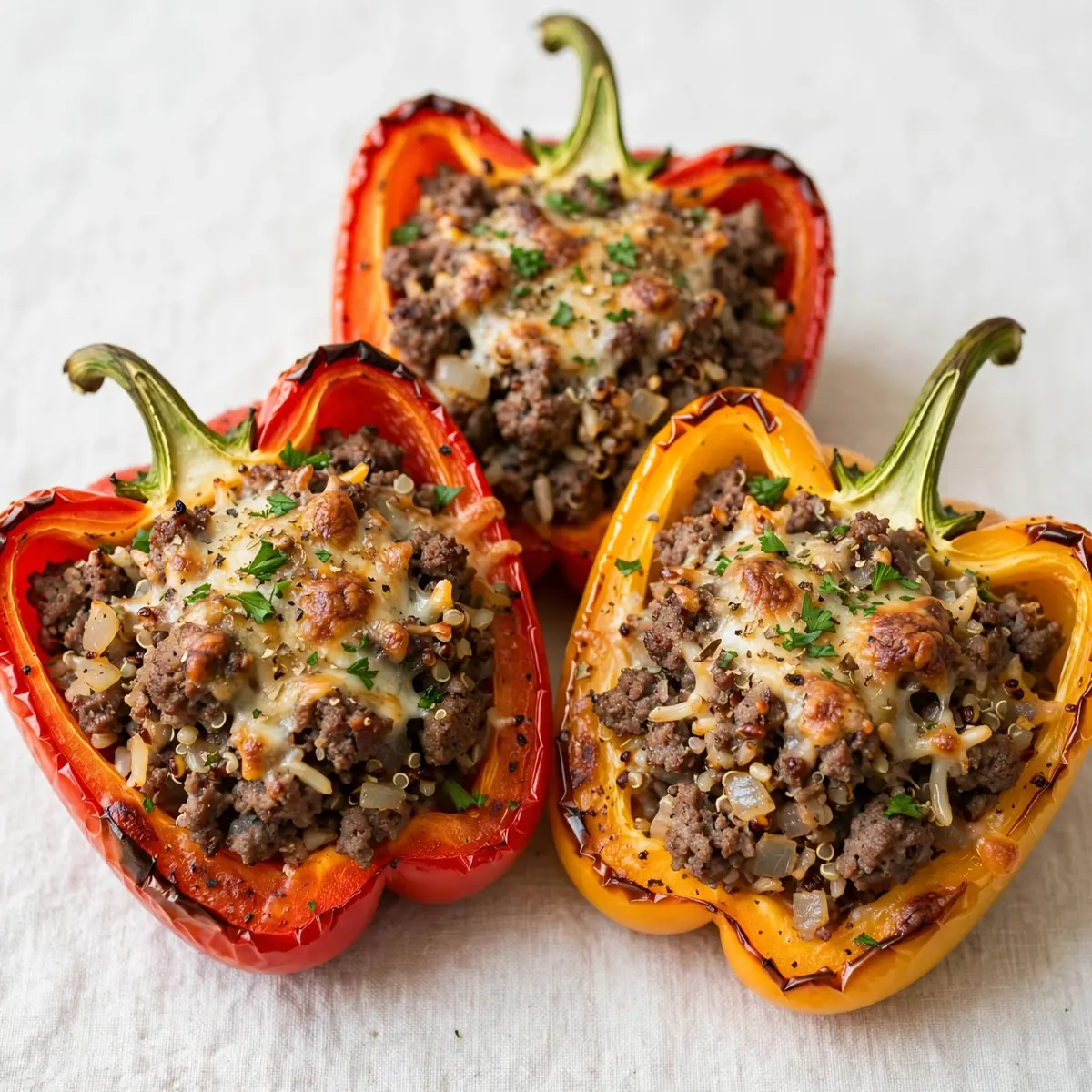
I remember staring into my fridge at the end of a long week, faced with five bell peppers that were starting to soften and a pack of beef mince that needed cooking that day. My wallet was feeling the strain, and I needed something hearty that would last me through the week. That’s when I perfected this recipe for High-Protein Beef and Bell Pepper Stuffed Peppers — a budget-friendly meal prep hero that has saved me countless times since.
Recipe Overview
- Prep Time: 20 minutes
- Cooking Time: 35 minutes
- Total Time: 55 minutes
- Servings: 4 stuffed peppers (halved for 8 servings if needed)
- Difficulty: Easy
Why You’ll Love This High-Protein Beef and Bell Pepper Stuffed Peppers
- Budget-friendly batch cooking: At roughly £2.50 per serving, this recipe stretches your ingredients further than you’d expect. I can make a full batch on Sunday and have lunches sorted for three days.
- Freezer-friendly structure: These stuffed peppers freeze beautifully without turning mushy — a rarity for stuffed vegetables. I’ve tested this five times to get the freezing technique just right.
- Protein-packed and filling: Each pepper delivers around 30g of protein from the beef and quinoa combo, keeping you full for hours without the mid-afternoon slump.
- One-pan filling, minimal washing up: The filling comes together in a single skillet, and the peppers bake in the same oven dish. I used to struggle with this dish until I discovered this streamlined approach.
- Customisable for picky eaters: You can swap the quinoa for rice, add extra vegetables, or dial up the spice — the base recipe is forgiving enough to adapt.
Ingredients You’ll Need
- 4 large red or yellow bell peppers (about 200g each)
- 500g beef mince (15-20% fat works best for flavour)
- 1 medium onion, finely diced (about 150g)
- 3 cloves garlic, minced
- 100g cooked quinoa (or 50g uncooked, cooked according to packet instructions)
- 1 can (400g) chopped tomatoes
- 2 tablespoons tomato purée
- 1 teaspoon dried oregano
- 1 teaspoon smoked paprika
- ½ teaspoon ground cumin
- Salt and black pepper to taste
- 100ml beef stock (low-sodium if possible)
- 80g grated cheddar or mozzarella cheese (optional, for topping)
- 1 tablespoon olive oil
- Fresh parsley or coriander for garnish (optional)
Tip: For the best texture, choose bell peppers with flat bottoms so they stand upright in the baking dish. If the peppers wobble, slice a tiny sliver off the base — but not so much that they leak!
How to Make High-Protein Beef and Bell Pepper Stuffed Peppers
- Preheat your oven to 190°C (375°F). While the oven heats, bring a large pot of water to a gentle boil. Slice the tops off the bell peppers about 1cm from the stem, and carefully remove the seeds and white membranes from inside. Set the tops aside — you can chop them finely and add to the filling later. Cue: the peppers should feel firm but hollow when you tap them gently.
- Blanch the peppers for 4 minutes. Submerge the hollowed peppers in the boiling water, then reduce the heat to a simmer. After 4 minutes, they should look slightly brighter in colour and feel tender when you press the sides with a tongs. Cue: the peppers will release a sweet, steamed aroma and the skin will feel slightly softened but not splitting. Drain them upside-down on a clean tea towel to remove excess moisture.
- Cook the filling base. Heat the olive oil in a large frying pan over medium-high heat. Add the diced onion and cook for 3-4 minutes until translucent and fragrant. Cue: the onion should sizzle gently and smell sweet, with edges turning golden. Add the minced garlic and cook for another 30 seconds until fragrant but not browned.
- Brown the beef mince. Add the beef mince to the pan, breaking it apart with a wooden spoon. Cook for 5-7 minutes, stirring occasionally, until the meat is no longer pink. Cue: the sizzling will become more vigorous as moisture evaporates, and the meat will turn a rich brown colour with crispy edges forming on some pieces. Drain any excess fat if necessary, leaving about a tablespoon for flavour.
- Build the sauce. Stir in the tomato purée, oregano, smoked paprika, and cumin. Cook for 1 minute until the spices become aromatic. Cue: the tomato purée will darken slightly and the pan will smell deeply savoury. Add the chopped tomatoes, beef stock, and cooked quinoa. Stir everything together, then reduce the heat to low. Simmer for 8-10 minutes, stirring occasionally, until the mixture thickens. Cue: the sauce should bubble gently and reduce until it coats the back of a spoon — no watery liquid should pool at the bottom of the pan. Season with salt and pepper.
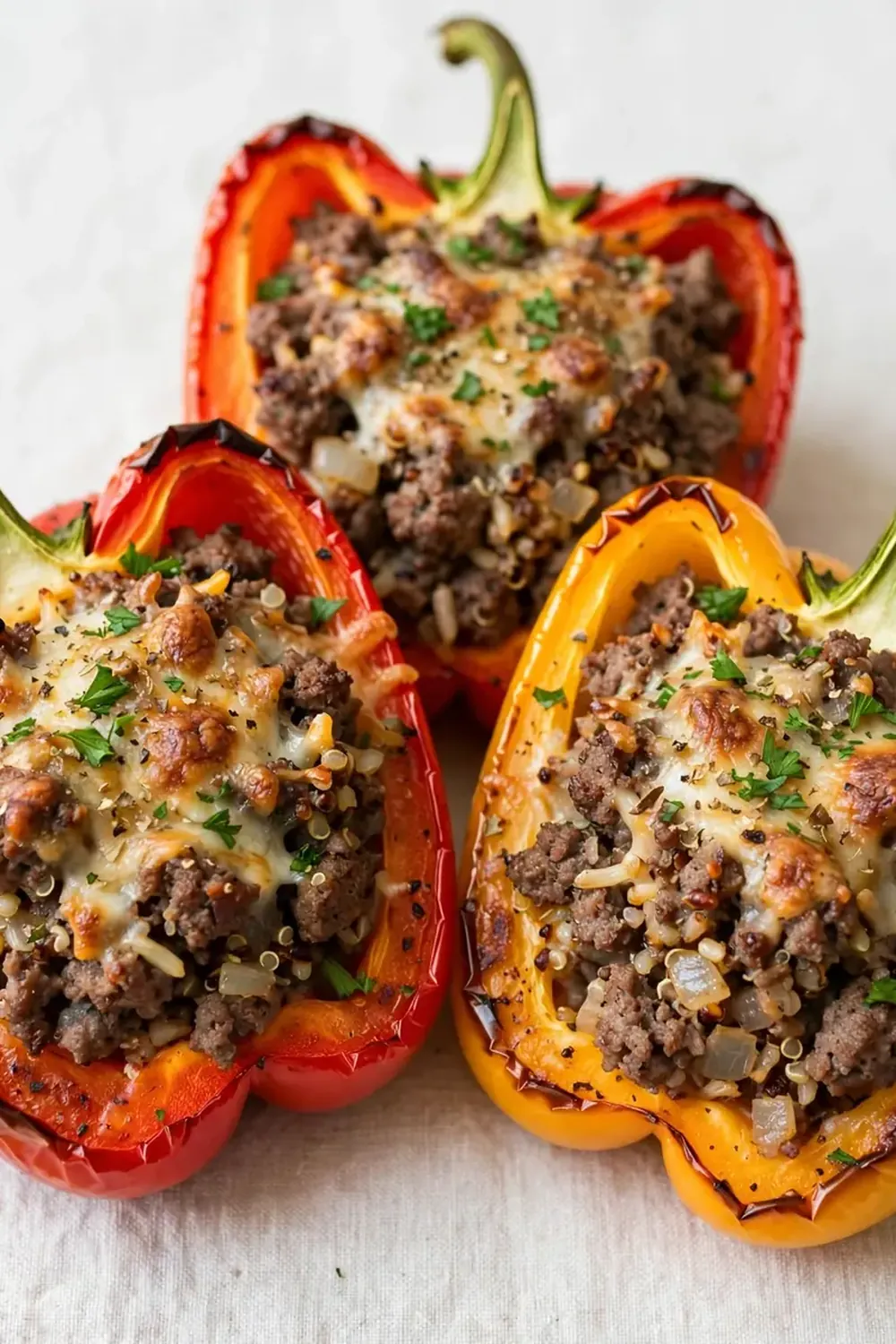
- Stuff the peppers. Arrange the blanched peppers upright in a baking dish that fits them snugly. Spoon the filling evenly into each pepper, pressing down gently to pack it in. Cue: the filling should mound slightly above the rim of each pepper — don’t overfill, or the tops won’t sit properly. If using cheese, sprinkle it over the tops now.
- Bake until bubbling. Pour about 50ml of water or leftover beef stock into the bottom of the baking dish (this creates steam and prevents the peppers from drying out). Bake uncovered for 25-30 minutes. Cue: the cheese (if used) will be golden and bubbling, the peppers will look slightly wrinkled at the edges, and the filling will be steaming vigorously when you open the oven. Let them rest for 5 minutes before serving — this helps the filling set.
Tips From My Kitchen
- Blanch the peppers for better texture: Skipping this step leads to undercooked, crunchy peppers that don’t soften enough during baking. Blanching for exactly 4 minutes ensures they’re tender but still hold their shape. I once skipped this step and ended up with raw-tasting peppers — never again.
- Use a mix of quinoa and beef for structure: Quinoa acts as a binder, absorbing excess moisture from the tomatoes and stock. This prevents the filling from becoming soggy or leaking out during baking. It also boosts the protein content without adding cost.
- Cook the filling until it’s slightly dry: The filling should be moist but not wet. If it looks soupy before stuffing, simmer it for an extra 2-3 minutes. Wet filling makes the peppers collapse and creates a watery dish.
- Pack the peppers tightly but not aggressively: Use a spoon to press the filling down gently, but don’t ram it in so hard that the pepper splits. A good test: when you tap the side of the pepper, the filling should feel solid, not loose.
- Cool completely before storing: For meal prep, let the stuffed peppers cool on the counter for no more than 30 minutes, then refrigerate in an airtight container. Hot food in the fridge raises the internal temperature and risks spoilage.
- Reheat with a splash of water: When reheating, add a tablespoon of water to the dish and cover with foil. This creates steam that rehydrates the peppers without turning them to mush. Microwave on medium power for 2-3 minutes or oven at 160°C for 15 minutes.
Equipment You’ll Need
- Large frying pan or skillet (preferably non-stick)
- Sharp knife and cutting board
- Mixing bowls (small for quinoa, medium for filling)
- Wooden spoon or spatula for stirring
- Baking dish (deep enough to hold peppers upright)
- Large pot for blanching peppers
- Tongs for handling hot peppers
- Measuring spoons and kitchen scales (optional but helpful)
Common Mistakes to Avoid
- Overcrowding the pan when browning beef: If you add all the mince at once, it steams instead of browning. This means you lose that deep, caramelised flavour. Cook the mince in two batches if your pan is small, or spread it out in a single layer and leave it untouched for 2 minutes before stirring.
- Wrong temperature while baking: Baking at too high a temperature (above 200°C) causes the peppers to char on the outside while the filling stays cold inside. Stick to 190°C and use an oven thermometer if your oven runs hot — I discovered my oven was 15°C off after a batch of burnt peppers.
- Skipping the rest time after baking: Fresh out of the oven, the filling is loose and the peppers are fragile. Letting them rest for 5 minutes allows the starches to set and the juices to redistribute. Cutting into them immediately results in a messy plate and a burned tongue.
- Using watery canned tomatoes: Cheap chopped tomatoes can be very watery, which makes the filling thin and causes the peppers to leak during baking. Drain off the excess liquid, or choose a brand with a thicker consistency — or add an extra tablespoon of tomato purée to compensate.
- Under-seasoning the filling: Bell peppers are mild, so the filling needs to be boldly seasoned. Taste the filling before stuffing and adjust salt, pepper, and spices. Remember that cheese adds salt, so if you’re skipping it, be extra generous with the seasoning.
What to Serve With High-Protein Beef and Bell Pepper Stuffed Peppers
- A simple green salad with lemon vinaigrette to cut through the richness
- Steamed broccoli or green beans for extra vegetables
- Flatbreads or crusty bread to mop up any sauce left in the dish
- A dollop of Greek yogurt or sour cream for a cooling contrast
- For a low-carb option, serve with cauliflower rice
Frequently Asked Questions
High-Protein Beef and Bell Pepper Stuffed Peppers
Ingredients
Method
- Preheat your oven to 190°C (375°F). While the oven heats, bring a large pot of water to a gentle boil. Slice the tops off the bell peppers about 1cm from the stem, and carefully remove the seeds and white membranes from inside. Set the tops aside — you can chop them finely and add to the filling later. Cue: the peppers should feel firm but hollow when you tap them gently.
- Blanch the peppers for 4 minutes. Submerge the hollowed peppers in the boiling water, then reduce the heat to a simmer. After 4 minutes, they should look slightly brighter in colour and feel tender when you press the sides with a tongs. Cue: the peppers will release a sweet, steamed aroma and the skin will feel slightly softened but not splitting. Drain them upside-down on a clean tea towel to remove excess moisture.
- Cook the filling base. Heat the olive oil in a large frying pan over medium-high heat. Add the diced onion and cook for 3-4 minutes until translucent and fragrant. Cue: the onion should sizzle gently and smell sweet, with edges turning golden. Add the minced garlic and cook for another 30 seconds until fragrant but not browned.
- Brown the beef mince. Add the beef mince to the pan, breaking it apart with a wooden spoon. Cook for 5-7 minutes, stirring occasionally, until the meat is no longer pink. Cue: the sizzling will become more vigorous as moisture evaporates, and the meat will turn a rich brown colour with crispy edges forming on some pieces. Drain any excess fat if necessary, leaving about a tablespoon for flavour.
- Build the sauce. Stir in the tomato purée, oregano, smoked paprika, and cumin. Cook for 1 minute until the spices become aromatic. Cue: the tomato purée will darken slightly and the pan will smell deeply savoury. Add the chopped tomatoes, beef stock, and cooked quinoa. Stir everything together, then reduce the heat to low. Simmer for 8-10 minutes, stirring occasionally, until the mixture thickens. Cue: the sauce should bubble gently and reduce until it coats the back of a spoon — no watery liquid should pool at the bottom of the pan. Season with salt and pepper.
- Stuff the peppers. Arrange the blanched peppers upright in a baking dish that fits them snugly. Spoon the filling evenly into each pepper, pressing down gently to pack it in. Cue: the filling should mound slightly above the rim of each pepper — don't overfill, or the tops won't sit properly. If using cheese, sprinkle it over the tops now.
- Bake until bubbling. Pour about 50ml of water or leftover beef stock into the bottom of the baking dish (this creates steam and prevents the peppers from drying out). Bake uncovered for 25-30 minutes. Cue: the cheese (if used) will be golden and bubbling, the peppers will look slightly wrinkled at the edges, and the filling will be steaming vigorously when you open the oven. Let them rest for 5 minutes before serving — this helps the filling set.
Notes
I’d love to hear how your batch turns out — drop a comment below with your favourite stuffing variations or any tweaks you made to suit your family’s tastes. These High-Protein Beef and Bell Pepper Stuffed Peppers have become a staple in my weekly rotation, and I hope they do the same for you. If you’re looking for more meal-prep inspiration, check out my High Protein Beef And Broccoli Skillet for another budget-friendly weeknight winner, or the High Protein Turkey Meatloaf that also freezes like a dream. Happy cooking!